Leave Your Message

How to Choose a Metal Spinning CNC Machine in 2026?

Choosing a Metal Spinning Cnc Machine in 2026 requires more than comparing prices and advertised spindle speeds. The right machine must match your materials, part dimensions, production volume, and operator experience. A small workshop may need a compact unit for aluminum lampshades and stainless-steel covers. A high-volume manufacturer may require stronger tooling, automated loading, and stable cycle times. These differences matter.

Start with the workpiece. Measure its maximum diameter, height, wall thickness, and required forming depth. Then examine spindle power, rated payload, axis travel, chuck design, and tooling compatibility. A machine that forms thin aluminum smoothly may struggle with thicker stainless steel. Ask suppliers for documented test results, sample parts, tolerance data, and service response times. Photos alone prove very little.

Real-world experience also exposes hidden costs. Installation, software training, tooling changes, inspection equipment, and scheduled maintenance can affect the investment more than the purchase price. Look for clear manuals, accessible replacement parts, and qualified technical support. Safety guarding and control-system reliability should never be treated as optional features.

Some assumptions will be wrong. A faster spindle may not improve productivity if setup takes too long. More automation may create unnecessary complexity for short production runs. This guide examines these trade-offs through practical selection criteria, technical evidence, and shop-floor considerations. It will help buyers compare machines honestly, even when supplier claims sound impressive. Good decisions begin with measurable requirements, not attractive brochures.
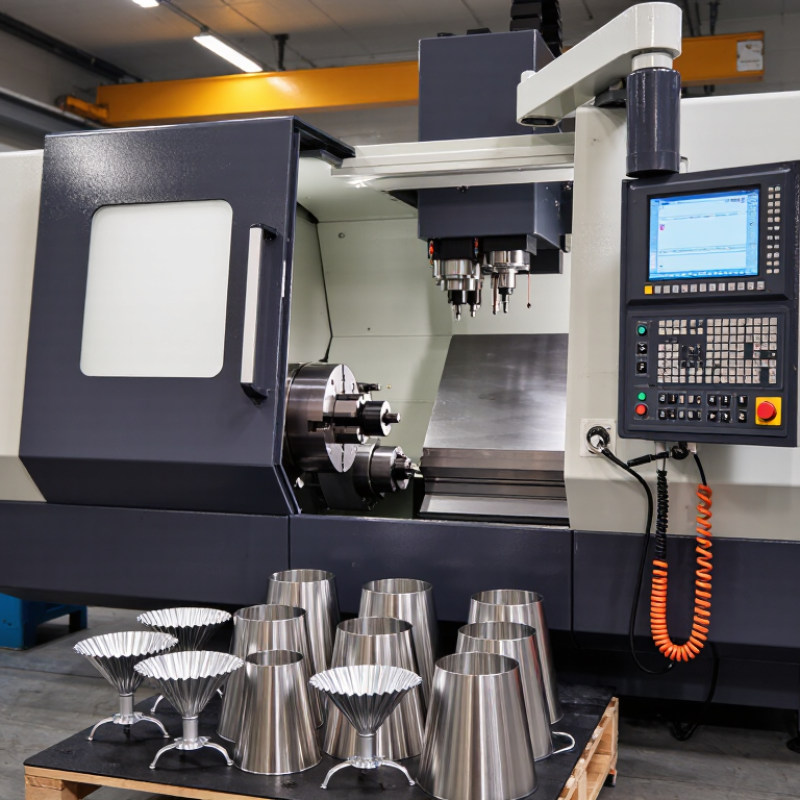
How to Choose a Metal Spinning CNC Machine in 2026?

Define the Metal Spinning Processes and CNC Machine Types

Choosing a metal spinning CNC machine in 2026 starts with defining the forming process. Metal spinning shapes a circular blank over a mandrel with controlled roller pressure. Conventional spinning keeps the blank’s thickness nearly unchanged. Shear spinning intentionally reduces thickness while extending the part. Tube spinning and flow forming apply tighter control to cylindrical components. These processes overlap in conversation, but their tooling and force requirements differ.

CNC machine types also vary by structure and motion. Horizontal machines suit many bowls, cones, and lighting housings. Vertical machines can support heavier tooling and large-diameter workpieces. Single-roller systems offer simpler control. Dual-roller machines can improve balance and production speed. Multi-axis models handle complex profiles, but they require stronger programming skills and careful collision checks. Check spindle torque, maximum blank diameter, tailstock force, axis travel, and measuring accuracy. A larger motor is not automatically better.

Tips: Ask for a sample run using your actual alloy and thickness. Measure the wall at the rim, middle, and formed corner. Watch for wrinkles, tearing, springback, and uneven thinning. Review the machine’s guarding and emergency controls before purchase. I have found that brochures rarely show setup difficulty. A machine may meet every specification yet feel inefficient during tool changes. Leave room for that uncomfortable possibility. Also confirm operator training, spare tooling access, and local technical support.
Match Machine Capacity with Part Size, Material, and Production Needs

How to Choose a Metal Spinning CNC Machine in 2026?

Machine capacity must match the part, not the salesperson’s promise. Measure the finished diameter, blank diameter, height, wall thickness, and forming depth. Leave practical clearance for tooling and loading. A machine rated for 1,000 mm may struggle with a 950 mm blank. Check spindle torque, motor power, slide travel, and maximum blank weight. Aluminum needs different force and speed settings than stainless steel or titanium. The wrong match creates chatter, wrinkles, tool wear, and expensive scrap.

Production volume changes the decision. For prototypes, prioritize flexible tooling, quick setup, and programmable control. For repeated batches, evaluate cycle time, automatic loading, tool storage, and inspection feedback.

The International Federation of Robotics reported 541,302 industrial robot installations worldwide in 2023. That figure signals stronger automation demand, but automation only pays when part flow is stable.

A high-speed machine can become a costly idle asset between small orders. I have seen capacity plans fail because operators measured cycle time, but ignored setup time.

Tips: Build a capacity sheet using your largest blank, hardest material, and longest cycle. Test one sample before approval. Ask for measured torque data, not only rated power. Compare energy use per part; the U.S. Department of Energy identifies motor-driven systems as major industrial electricity users. Recheck the calculation after real trials. The first estimate is often too optimistic.

Evaluate Spindle Power, Tooling, Automation, and Control Features

Choosing a metal spinning CNC machine in 2026 requires more than comparing price and maximum diameter. Spindle power should match the alloy, wall thickness, and forming speed you actually use. A machine may advertise high torque, yet struggle during deep forming at low speed. Check torque curves, not only motor horsepower. During a shop trial, listen for vibration and watch whether the workpiece stays stable under pressure.

Tooling also affects consistency. Quick-change holders can reduce setup time, while rigid rollers help prevent chatter on stainless steel. Confirm that standard tooling fits your production range. Automation deserves equal attention. Automatic loading, part ejection, and in-process measurement can reduce repetitive handling, but they may add maintenance points. I once underestimated sensor cleaning time. That mistake cost more than expected.

Tips: Bring three real workpieces to the supplier. Test your thinnest wall, hardest alloy, and deepest profile. Ask operators to run the control system, not just sales staff. Look for clear alarms, recipe storage, tool-offset adjustment, and remote diagnostics. A good interface shortens training, but it cannot fix poor process data. Verify cycle time with scrap allowance included. Also check service response, spare-part availability, and operator training. These details feel boring. They often decide uptime.

Compare Accuracy, Safety Systems, Maintenance, and Software Compatibility

How to Choose a Metal Spinning CNC Machine in 2026?

Compare Accuracy, Safety Systems, Maintenance, and Software Compatibility

Choosing a metal spinning CNC machine starts with measurable accuracy. In practical shop trials, inspect diameter consistency across several spun parts. A machine holding tight tolerances reduces rework and material waste. Check repeatability, not only the advertised resolution. Ask for test cuts using your actual aluminum, steel, or copper blanks. A polished specification can hide ordinary production limits. I learned that lesson after trusting one impressive demonstration.

Safety deserves equal weight. Look for enclosed working areas, interlocked doors, emergency stops, and clear guarding around rotating tooling. The control system should show faults without confusing operators. Confirm that restarting after a power interruption requires deliberate action. Do not accept vague safety claims. Ask to review maintenance access while the machine remains safely isolated. Small details matter, especially near heavy chucks and sharp metal edges.

Maintenance influences long-term reliability more than many buyers expect. Review lubrication points, filter access, spindle inspection steps, and service documentation. Simple access can save hours each month. Software compatibility also needs careful testing. Verify support for common CAD and CAM file formats, post-processors, tool libraries, and version control. Request a sample program using your own geometry. File conversion errors can distort profiles or create unexpected tool paths. I still prefer a slower manual check before production, although that habit is not always efficient. Reliable suppliers should explain update policies, training options, and technical response times in writing.

Assess Total Cost, Supplier Support, and Long-Term Production Value

Choosing a metal spinning CNC machine in 2026 requires more than comparing purchase prices. In production trials, I have seen a low-cost machine create expensive delays through unstable tooling, slow setup, and inconsistent wall thickness. Ask for a sample run using your actual alloy, diameter, and target tolerance. Measure cycle time, scrap rate, surface finish, and operator adjustments. Small details matter.

Calculate total cost over five years. Include tooling, software updates, energy use, preventive maintenance, training, financing, and downtime. Request a written service response time, spare-parts plan, and remote support procedure. A supplier should explain who solves a servo alarm at 2 a.m. and how quickly a technician can reach your facility. Ask for references from similar production environments, not only polished demonstrations. Check whether manuals are clear enough for a new operator. That test is often revealing.

Long-term value depends on usable capacity, not impressive specifications. Confirm whether the machine can handle future part sizes and planned automation. Review accuracy after extended production, not after one perfect sample. A six-hour run may expose heat drift or tool wear. I also examine training quality, because rushed instruction becomes a hidden cost. Some purchasing decisions still rely on optimistic spreadsheets. Mine did once. Recheck every assumption with production data, and leave room for maintenance, process learning, and occasional failed experiments.

How to Choose a Metal Spinning CNC Machine in 2026? - Assess Total Cost, Supplier Support, and Long-Term Production Value
Indicative 2026 Selection and Total-Cost Comparison for Metal Spinning CNC Machines
Machine Category Typical Workpiece Diameter Recommended Material Range Typical Wall Thickness Spindle Power Spindle Speed Range Axis Configuration Typical Purchase Price Installation and Training Estimated Annual Maintenance Five-Year Ownership Cost Typical Production Fit Supplier Support Requirements Long-Term Value Assessment
Entry Precision Up to 600 mm Aluminum, copper, brass, mild steel 0.8–3.0 mm 7.5–15 kW 0–2,000 rpm 2–3 controlled axes USD 75,000–140,000 USD 5,000–12,000; usually 2–5 days Approximately 3–5% of purchase price USD 115,000–210,000, excluding labor and facility costs Prototype work, low-volume orders, simple rotational parts Remote diagnostics, documented setup procedures, spare-parts availability within 10–15 business days Strong value when utilization is below approximately 2,000 spindle hours per year and part variety is high
Mid-Range Production Up to 1,200 mm Aluminum, stainless steel, mild steel, nickel alloys with suitable tooling 1.0–5.0 mm 15–30 kW 0–1,500 rpm 3–4 controlled axes USD 160,000–300,000 USD 10,000–25,000; usually 5–10 days Approximately 3–6% of purchase price USD 245,000–455,000, excluding labor and facility costs Repeat production, lighting components, industrial covers, pressure-related parts Telephone and remote support during production hours, on-site service within 3–7 business days, operator training, application engineering Often the best balance of automation, flexibility, throughput, and five-year cost for small and medium manufacturers
High-Throughput Industrial Up to 2,000 mm or more Stainless steel, carbon steel, aluminum, titanium and high-strength alloys with process-specific tooling 1.5–8.0 mm 30–75 kW 0–1,000 rpm 4–6 controlled axes USD 350,000–750,000 USD 25,000–60,000; usually 10–20 days Approximately 4–8% of purchase price USD 530,000–1,120,000, excluding labor and facility costs High-volume production, heavy-gauge components, aerospace and energy-related applications Guaranteed response times, local service capability, critical spare-parts stock, preventive-maintenance planning, process optimization support Justified when utilization exceeds approximately 4,000 spindle hours per year or downtime has a high contractual cost
Cost basis and evaluation notes: The figures are indicative 2026 market ranges for new CNC metal spinning equipment and are intended for preliminary budgeting. Five-year ownership cost includes the machine purchase, typical installation and training, and five years of routine maintenance. It excludes tooling, electricity, labor, floor preparation, financing, taxes, freight, consumables, and major process-specific upgrades. Actual values vary according to workpiece geometry, material, automation level, regional service coverage, production hours, and negotiated warranty terms.