How to Master the Spinning Forming Process for Optimal Results?
Mastering the Spinning Forming Process is crucial for achieving high-quality results in manufacturing. According to Dr. Emily Carter, a leader in metal forming techniques, "Success in spinning requires both skill and understanding of the material."
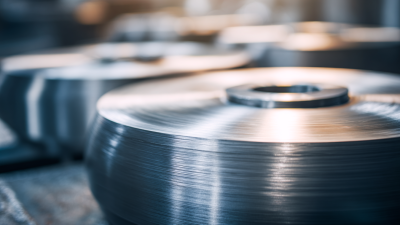
The Spinning Forming Process involves transforming a flat metal disk into a desired shape by rotating it against a tool. This technique is admired for its efficiency and precision. Yet, many newcomers often overlook small details that can lead to significant flaws. Proper tool alignment, material selection, and speed are critical factors that impact the outcome.
However, challenges persist. Inconsistent thickness or surface defects can arise if one fails to adjust to the material's unique characteristics. It's essential to continuously refine skills and learn from mistakes. Observing seasoned professionals can provide invaluable insights into the nuances of the process. Embracing both the art and science of the Spinning Forming Process can lead to optimal results in manufacturing.

Understanding the Basics of Spinning Forming Process in Manufacturing
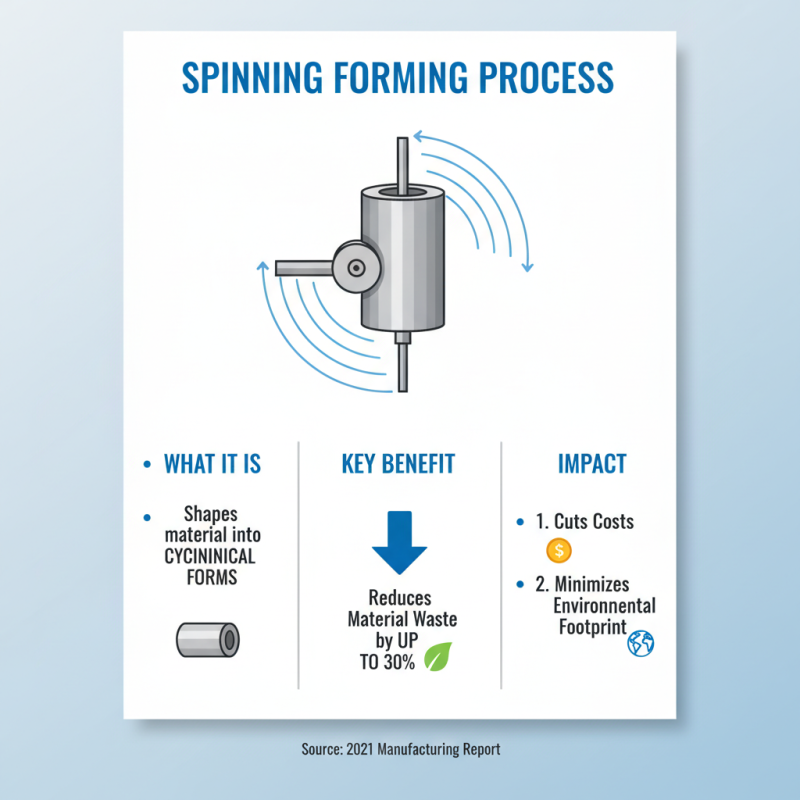
The spinning forming process is a vital manufacturing technique. It involves shaping material into cylindrical forms. Understanding the basics can significantly enhance production quality. According to a 2021 report, spinning forming can reduce material waste by up to 30%. This efficiency not only cuts costs but also minimizes environmental impact.
In the spinning process, metal sheets are spun at high speeds. The force generated helps mold the material into the desired shape. Operators must pay attention to factors like temperature and speed. An error here can lead to defects. For instance, a study indicated that incorrect spinning speeds could result in wall thickness variations of up to 20%. Such inconsistencies can affect product performance in the long run.
Training operators is crucial. Skilled personnel can identify issues early. Regular assessments of equipment are also important. Data suggests that 15% of production issues stem from equipment failure. Reflecting on these aspects can lead to better quality control. Engaging in continuous improvement helps streamline operations and boosts overall efficiency.
Key Parameters Influencing Spinning Process: Speed, Pressure, and Material
The spinning forming process is intricate. Key parameters like speed, pressure, and material directly impact the outcomes. Speed dictates the quality of the final product. A report by the Manufacturing Institute states that an increase in spinning speed can enhance production efficiency by up to 35%. However, if speeds are too high, defects in the material may occur. This trade-off requires careful consideration.
Pressure is another pivotal element. Proper pressure ensures the material flows correctly. Insufficient pressure can cause uneven surfaces. Conversely, excessive pressure may lead to cracking or other failures. A study from the Journal of Materials Processing suggests that maintaining optimal pressure can improve the integrity of the final product by 20%.
Material types also influence results. Different materials react uniquely during the spinning process. For instance, certain alloys perform better under high temperatures but may require precise cooling methods. This complexity presents challenges. Not every material will yield desired results. Continuous testing and monitoring are vital for achieving consistent quality. The industry still faces hurdles; refining these parameters can lead to significant advancements in spinning technology.
Techniques to Achieve High Precision and Surface Finish in Spinning
Mastering the spinning forming process requires precision and attention to detail. Achieving high surface finish begins with selecting the right material. The thickness of the material can greatly impact the final product. Using a uniform thickness ensures consistent results. Operators often overlook this aspect, leading to variability in the final piece.
Temperature control is another critical factor. Maintaining optimal heat reduces friction during spinning. This technique can enhance surface quality significantly. Sometimes, operators underestimate the importance of temperature. Ignoring this can result in defects that are difficult to fix later.
Furthermore, tooling must be chosen wisely. Proper tool geometry influences the final surface finish. Sharp tools create clean surfaces. Operators may not always check tool sharpness regularly, which can lead to subpar outcomes. Regular inspection is essential for maintaining quality. Each of these details plays a pivotal role in perfecting the spinning process. Flaws will often surface without diligence.
Impact of Material Selection on the Spinning Process Efficiency
The selection of materials plays a critical role in the efficiency of the spinning process. The properties of the chosen material can significantly influence the energy consumed during spinning. For example, denser materials often require more force. This can lead to higher operational costs. Finding the right balance between strength and weight is essential for optimal results.
Different materials respond uniquely to the spinning process. Some metals develop cracks at high temperatures, while plastics may deform easily under stress. Choosing a material that can withstand these conditions is vital. The texture and finish of the material can also affect the final product's quality. A smoother surface may reduce friction, enhancing efficiency.
However, mistakes can arise in material selection. Using a low-quality material might save costs initially but could lead to larger failures later. Reflecting on past experiences, it’s clear that a careful assessment of material properties is crucial. Ignoring this factor can lead to inefficiencies in production and potential loss of time and resources.
Troubleshooting Common Issues in Spinning Forming for Optimal Outcomes
Spinning forming can be tricky. Many factors can lead to unexpected results. One common issue is uneven wall thickness. This can occur if the material is not fed consistently. Check your setup if you notice this problem. Adjust the speed or pressure applied during the process.
Another frequent issue is surface defects. These can arise from improper tool maintenance. Worn tools or incorrect tool angles can lead to scratches or dents on the workpiece. Regularly inspect tools for wear and damage to prevent these flaws. Sometimes, even minor changes can make a big difference.
Additionally, monitoring temperature is crucial. Materials can behave differently at varying temperatures. If a part warps, consider the heating process. Is the material heated uniformly? Reflect on your techniques to ensure consistent quality. Proper adjustments and vigilance can significantly improve spinning forming outcomes.